
The “1, 2, 3” Trick I Use as a Nanny (and Why It Actually Works)
 Barbara Pivarcsi, MSc
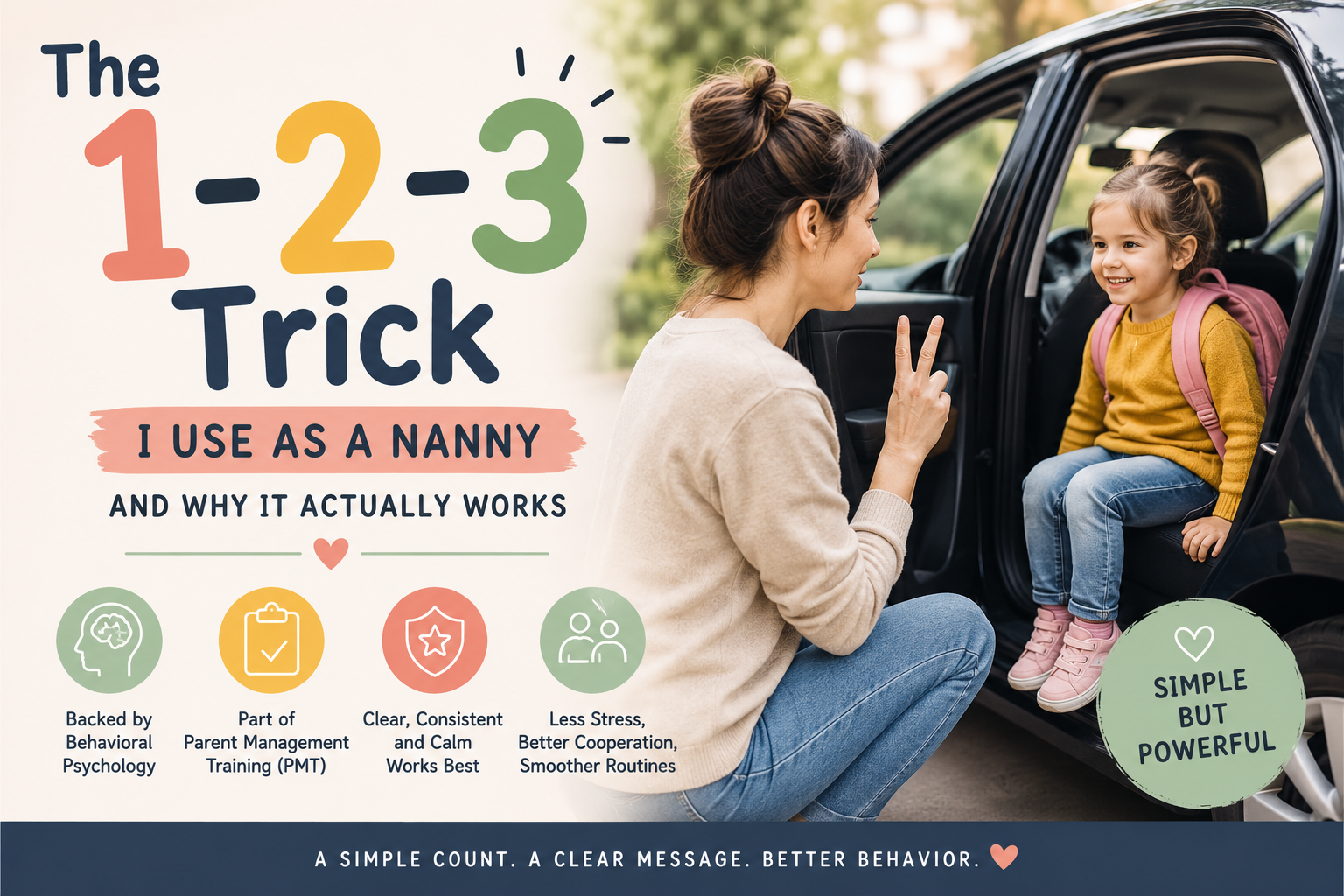
The “1, 2, 3” Trick I Use as a Nanny (and Why It Actually Works)
Working as a nanny, I’ve tried a lot of different ways to get kids moving—especially in those moments when you need to leave now.
One simple thing that works surprisingly well is counting:
“1… 2…”
Most of the time, they’re already in the car before I reach 3.
At first, it felt almost too simple. But it turns out there’s real psychology behind it—and it’s not just something I made up.
A well-known behavioral approach called 1-2-3 Magic, developed by clinical psychologist Thomas W. Phelan, is built around this exact idea. The method is designed for children roughly aged 2–12 and focuses on using calm counting instead of repeating instructions or arguing.
One of its core rules is often described as “no talking, no emotion.” In practice, that means giving a clear signal (like counting) without long explanations or frustration. The idea is that too much talking can actually make things worse—leading to negotiation, ignoring, or escalation instead of action.
And interestingly, research backs this up.
Studies on the 1-2-3 Magic program have found that caregivers who used this approach reported less disruptive behavior in children, reduced stress, and more effective discipline overall compared to those who didn’t use it.
So why does something this simple work?
Part of the answer comes from behavioral psychology. The method is closely related to a broader, evidence-based approach called Parent Management Training (PMT)—a well-researched framework that focuses on clear instructions, consistency, and predictable consequences.
From that perspective, counting works because:
- It gives a clear, consistent signal
- It reduces repeated instructions (which kids often tune out)
- It creates a small sense of urgency
- It removes emotional escalation
Instead of saying the same thing five times, you’re giving one structured cue—and following through if needed.
I’ve also noticed that it changes my own behavior. I stay calmer. I don’t over-explain. I don’t get pulled into back-and-forth conversations when we’re trying to get out the door.
Of course, it’s not something I use all the time. But for transitions—like getting in the car, putting shoes on, or leaving the playground—it works almost like magic.
Not because it’s magic.
But because it’s simple, consistent, and grounded in how children actually respond to structure.
Comments (0)
Sign in to leave a comment
Sign In